Russian military industry assessment: expert forecasts drone production volumes
Aviation expert Valerii Romanenko commented on the actual capabilities of the Russian defense complex regarding the production of strike drones and missiles until 2027.
 🛡️Security
Photo: UNIAN
Key points
- Forecasts of 20 million drones are unrealistic due to resource shortages.
- Russia could produce up to 100,000 jet drones annually if capacities double.
- China has imposed export restrictions on several UAV components.
A realistic look at production capacities
The issue of expanding military production in Russia remains crucial in the context of the country's security situation. Recently, various assumptions have emerged in the media regarding the potential scale of arms manufacturing, particularly strike UAVs. At the same time, specialized experts urge relying on the industry's practical capabilities, where the availability of qualified personnel, access to raw materials, and stable component supply chains play a decisive role.
According to aviation expert Valerii Romanenko, forecasts about producing millions of devices seem exaggerated due to several objective constraints. In particular, systematic strikes on manufacturing facilities and enterprises supplying raw materials and electronics significantly hinder the development pace of the Russian defense sector. Despite attempts to expand areas at certain plants, resource shortages remain a limiting factor.
Forecasts for jet drones and new missiles
Analyzing the potential output of jet drones, the specialist notes that if production bases are successfully doubled, the total number of Geran-series devices could reach about 100,000 units per year. This corresponds to figures within 8,000 to 9,000 devices monthly. In addition, the enemy's use of new small-sized cruise missiles such as Filin and Banderol has been recorded, with production volumes estimated at several thousand units.
«My forecasts are not that apocalyptic,» Valerii Romanenko emphasized while commenting on the overall situation regarding weapon production.
A separate factor influencing the situation is China's revision of export control rules. Although the new restrictions cover a range of critical engines and radio modules, some components remain available for import. This indicates that the struggle to limit the Russian military-industrial complex's resources continues at diplomatic and economic levels.
Source UNIAN — unian.ua/war/virobnictvo-droniv-u-rf-chi-zmozhe-rosiya-vipustiti-20… ↗
Read next
 🩺Health
Demographic Crisis and the Consequences of War: Expert Perspective on Ukraine's Population Future
Demographer Oleksandr Gladun highlights the direct link between the country's territorial integrity and population stabilization, warning about the aggressor's strategic …
 💼Economy
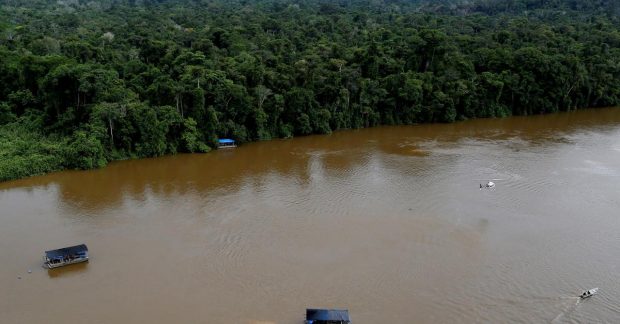
Amazon Research: How Climate Change Threatens the Planet's Ecosystem
Scientists warn of the critical vulnerability of the Amazon rainforest due to a combination of human impact and climate anomalies.
 🏛️Politics
Finland Seeks Over €25 Billion in Compensation from Russia and Gazprom
Finnish enforcement authorities are processing unprecedented claims to recover multi-billion euro damages from Russian entities.
 🏛️Politics
Donald Trump shares photos with Vladimir Putin on social media
Former US President Donald Trump has published a series of photographs from his meetings with world leaders, including the Russian ruler.
 🏛️Politics
Russian Foreign Ministry opposes Kaja Kallas' participation in Ukraine peace talks
The Russian Foreign Ministry has openly stated its opposition to the involvement of EU foreign policy chief Kaja Kallas in potential negotiations to end the war in Ukrain…
 🛡️Security
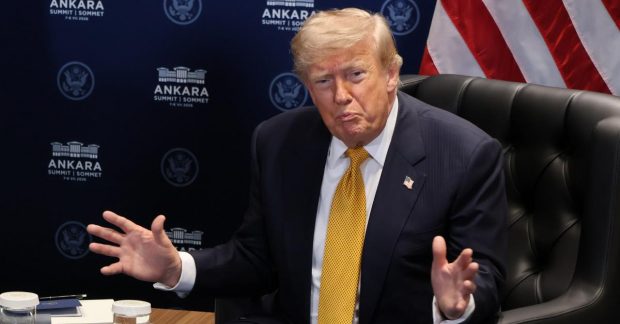
Donald Trump announces work on a larger-scale truce between Ukraine and Russia
U.S. President Donald Trump stated that Washington is working on expanding humanitarian agreements to achieve a broader ceasefire.